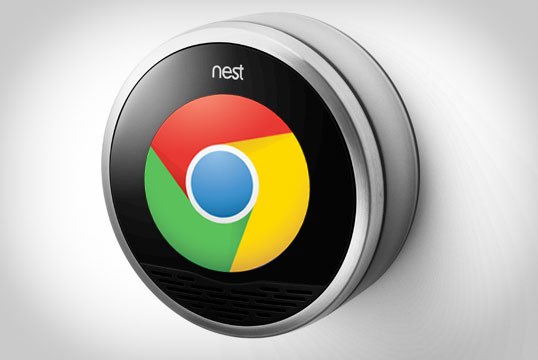
The Nest smart home, as it was known, has completely ended. Nest joined Google’s stable of hardware last year, and this month Google has fully taken over and rebranded to Google Nest.
Google have stated their privacy commitments to users and have promised to explain how personal data and captured footage will be used. However, the recent announcement this month has raised concerns. Bloomberg recently reported that thousands of Amazon employees listen to voice recordings captured in Echo speakers. Also, it has been found that not only do smart home devices save voice recordings, but also the transcripts and these cannot be deleted. Furthermore, Facebook and Google were both found to still track users even after they deactivated their accounts or turned off location services. Google have now improved this function allowing users to delete their location history.
Google will offer users of Nest the option to migrate to Google accounts. Despite this being an ‘option’, Google has warned that users who do not migrate would risk losing access to new features they may offer in the future, making this more of a necessity. If you already have a Google account for other Google products, you can migrate your Nest account to that. New users will automatically be given a new Google account.
It has also been announced that ‘Works with Nest’, the original Nest developer program, will be discontinued on August 31, 2019. This will prevent third party integrations, including the popular IFTTT app, and only ‘Work with Google Assistant’ development will be possible.
Google has stressed transparency and protection around its data collection practices, and that it will give users more options to review and delete data as and when necessary. However, previous experience has warranted concerns for data safety. This has been demonstrated by Facebook’s misuse of data during the takeover of Whatsapp and is highlighted by the fact that activity on Nest will be used to personalise your experience everywhere else on Google, which is clearly not the most robust privacy control.